


Descrizione
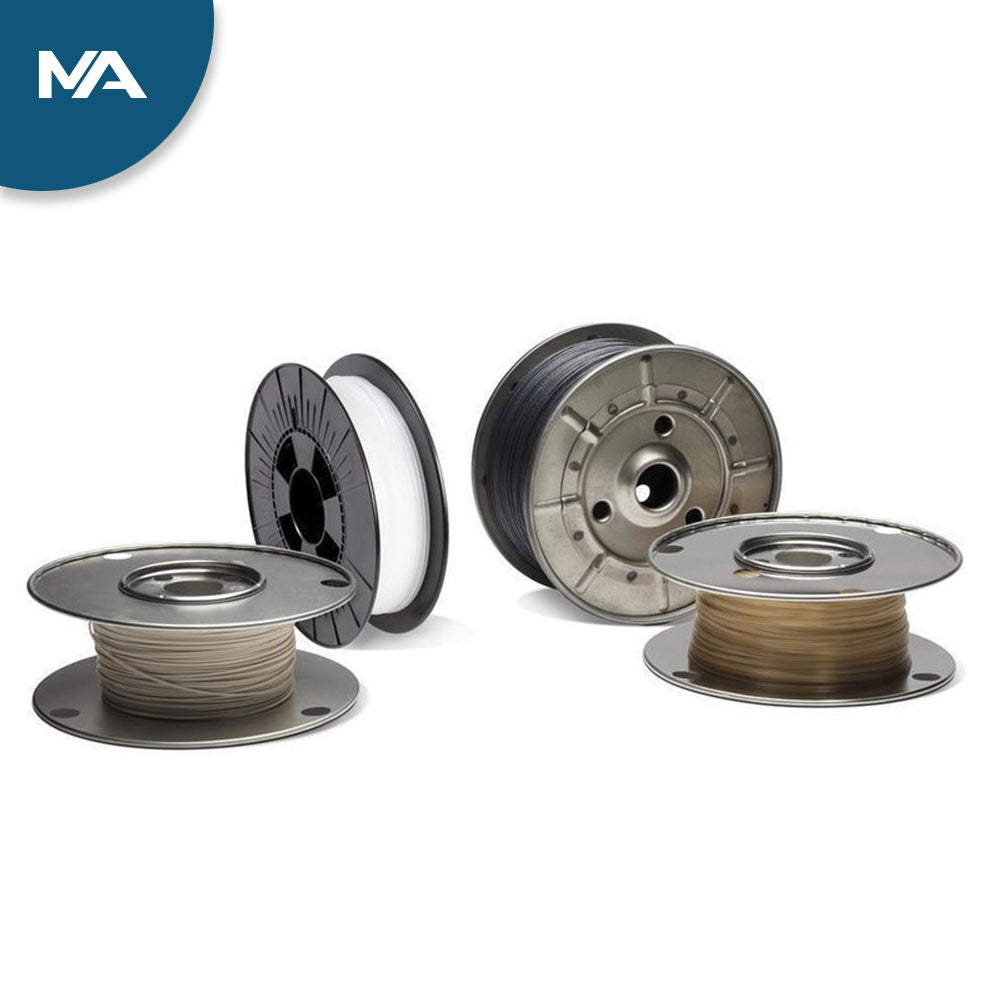
Solvay filaments are specialized plastics for 3D printing for industrial and professional applications.
Solvay Polyvinylidene Fluoride (PVDF) is a semi-crystalline fluorinated thermoplastic obtained from the polymerization of vinylidene fluoride (VF2). Without additives, it has the inherent stability of fluoropolymers, even when exposed to harsh environments, and offers users a unique combination of properties that translate into longer component life.
Solef PVDF resins are extremely pure polymers and, unlike many other plastics, do not require the use of stabilizers, plasticizers, lubricants, or flame retardants. Thanks to their chemical inertness and the virtual absence of released impurities, Solef PVDF natural resins are ideal materials for the distribution of ultrapure water and other chemically pure fluids used in the microelectronics industry.
Although some commonly known perfluorinated polymers (e.g., PTFE) exhibit chemical resistance in a wider range of aggressive environments, their mechanical properties are inferior to those of PVDF. PVDF represents an excellent compromise between general properties, very simple processing, and an advantageous price/performance ratio. PVDF resin has a significantly lower melting temperature than perfluorinated polymers. However, the mechanical properties (particularly creep resistance) of PVDF are superior in the temperature range of -20 to 150°C.
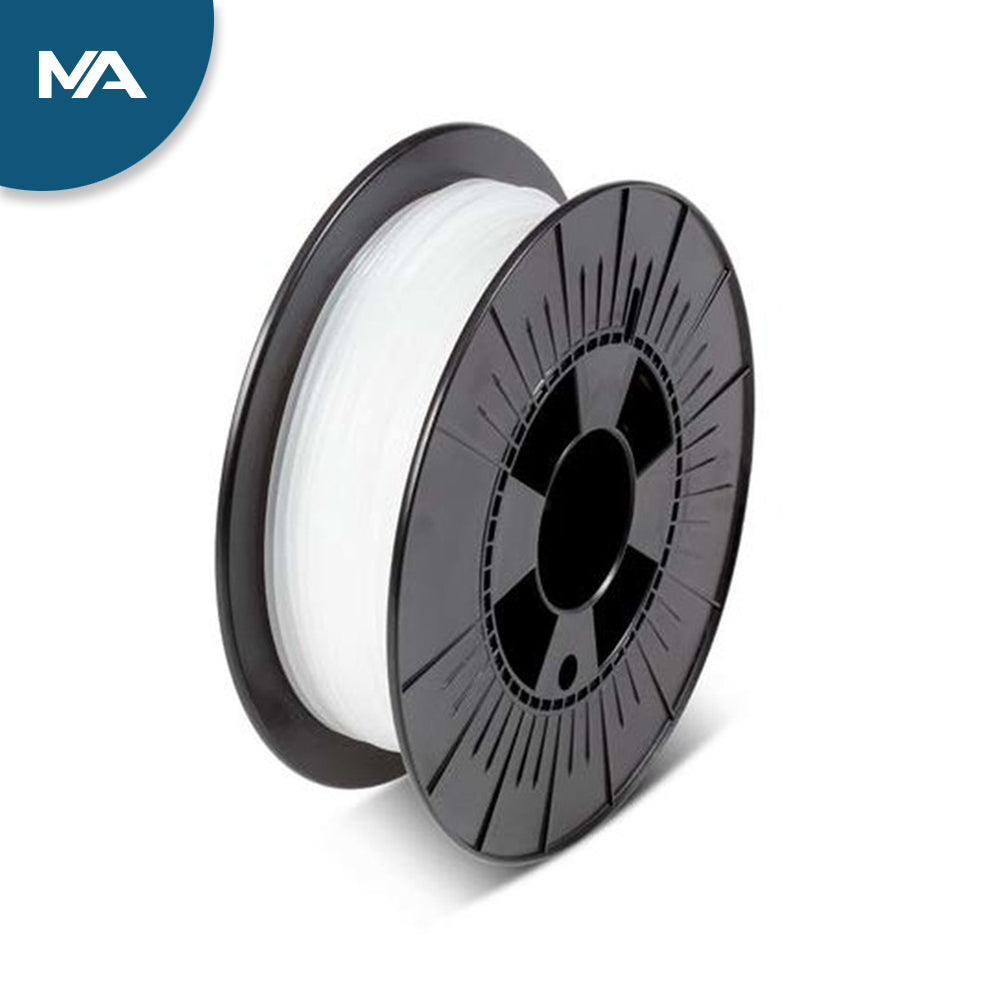
Solef PVDF AM MSC NT 1 filament is derived from a base resin optimized for FFF processing, which provides greater flexibility, dimensional stability and color stability.
Solef PVDF is a versatile material typically processed by injection molding, extrusion, and compression molding. Precision 3D printed parts using FFF with Solvay's AM-ready Solef PVDF AM MSC NT1 filament offer properties similar to parts produced by extrusion or compression molding.
Solef PVDF AM MSC NT1 filament can be printed on a wide range of 3D printers because it extrudes at temperatures of 200-250°C (recommended extruder temperature 225-235°C). To avoid warping, a heated bed with temperatures of 100-130°C is required.
Safety instructions for using Solvay Solef PVDF filament
PVDF resins are relatively non-toxic and not hazardous under typical handling or processing conditions. However, as with all polymeric materials exposed to high temperatures, ventilation must be provided to prevent exposure to any vapors and gases that may be generated. Excessive heating can produce irritating or toxic vapors and gases.
Some additives (additives) such as mica, glass fibers, light metals such as titanium, boron, aluminum can catalyze thermal decomposition rates and should be avoided.
Solef PVDF AM MSC NT1 filament should be safely processed below 250°C, preferably at 235°C, with adequate ventilation. Below 350°C, decomposition usually does not occur, and a safety margin of approximately 100°C is maintained. In the unlikely event of thermal decomposition, refer to the Material Safety Data Sheet or the Solef® PVDF Design and Processing Guide.
Solvay Solef PVDF Filament Handling and Storage
Drying is not required because the polymer does not absorb water due to its inherent non-hygroscopic nature. Low water absorption inhibits the dissipation of static friction charges; therefore, the bag containing the spool must be kept closed until pressure is applied to prevent contaminants from depositing on the filament. If the filament is brought from a cooler room, the closed package should not be opened until the material has reached the temperature of the processing room. This will prevent atmospheric moisture from condensing on the filament.
Solvay Solef is a registered trademark of Solvay SA